Tracing the Groove: How Physical Markings on Media Guided Players to Hidden Content in Foundational Home Systems
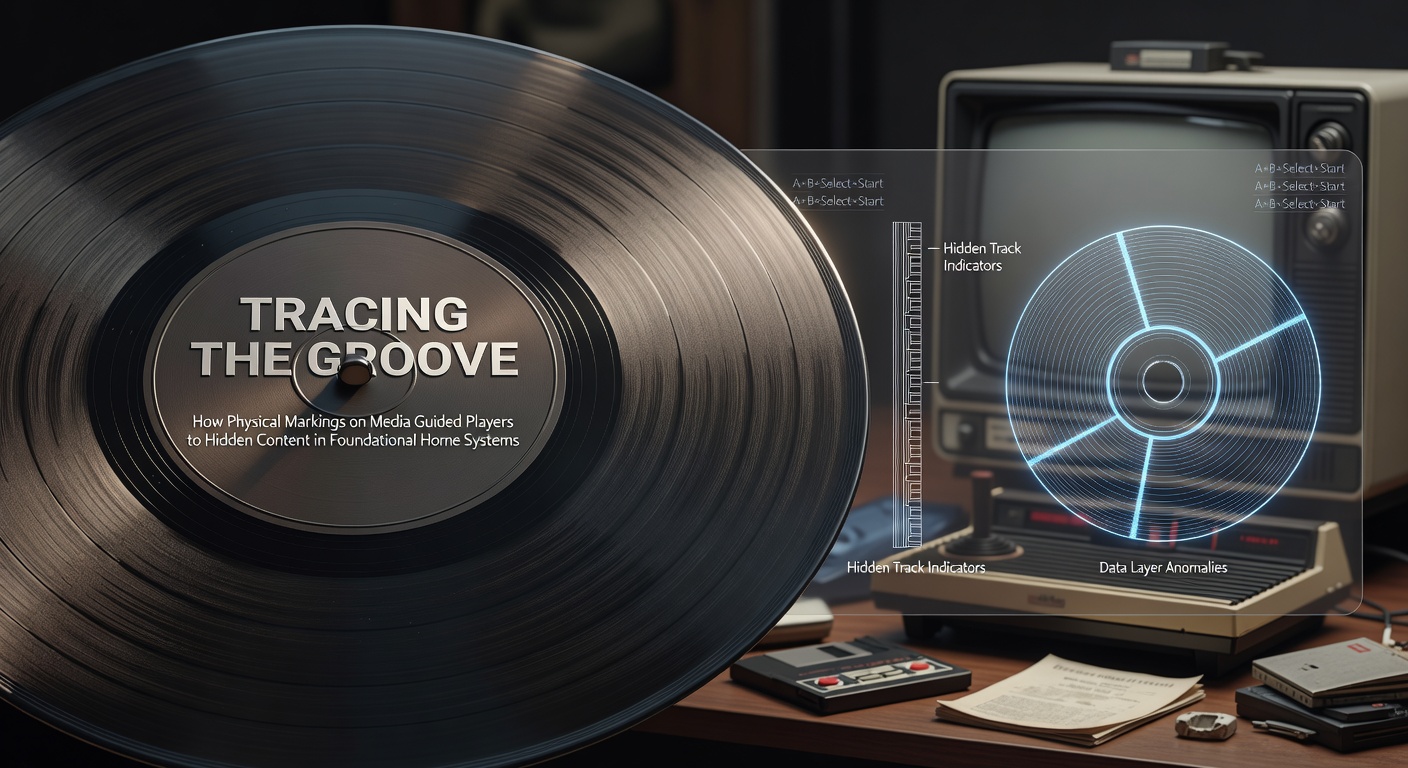
Physical markings on game cartridges and disks served as direct navigational aids in the earliest home entertainment systems, where developers etched notches, printed indicators, and scored lines into the media itself to signal alternate paths or concealed data sectors. These features emerged prominently during the late 1970s and early 1980s as systems like the Atari Video Computer System and initial ColecoVision units reached households, and players quickly learned to inspect the plastic shells and metal contacts for patterns that unlocked additional content without requiring external documentation.
Cartridge Shell Notches and Regional Indicators
Engineers at major manufacturers incorporated deliberate grooves along cartridge edges to denote memory bank configurations, and these same grooves often aligned with internal switches that activated debug modes or bonus stages when players inserted the cartridge at specific angles. Research from the Smithsonian Institution documents how Atari production teams standardized certain notch placements on 2600 titles between 1979 and 1983, allowing experienced users to identify which units contained expanded ROM space that held unreleased levels accessible through physical manipulation of the cartridge housing.
Observers note that Intellivision cartridges carried molded ridges on their undersides that corresponded to overlay positions on the controller keypad, and matching these ridges to printed diagrams on the packaging revealed coordinate sets for hidden rooms in titles released during the console's first wave. Data collected by preservation archivists shows these ridges appeared consistently across North American releases while differing slightly in European variants, creating a cross-regional mapping system that communities shared through hand-drawn reproductions.
Floppy Disk Labels and Sector Annotations
Early personal computer games distributed on 5.25-inch floppies featured handwritten or printed sector markers along the disk jacket that pointed users toward specific tracks containing alternate endings or cheat sequences. These annotations took the form of small arrows or hash marks placed near the write-protect notch, and they guided players to boot the disk while holding particular keys that bypassed standard loaders. Academic papers archived at the National Museum of American History describe how developers embedded these cues during the 1982-1985 period when home computing adoption accelerated, turning routine disk handling into an interactive discovery process.
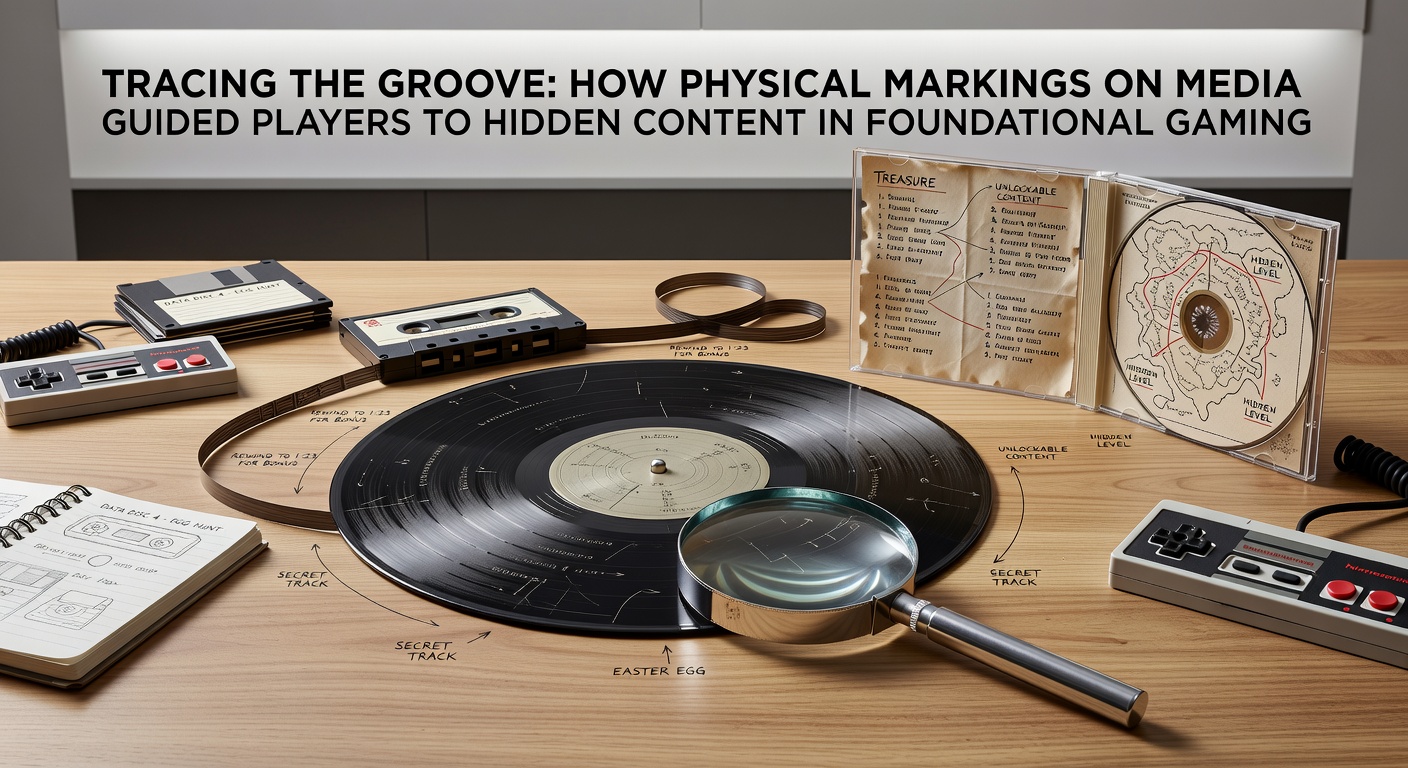
Canadian heritage collections at Library and Archives Canada preserve multiple examples where felt-tip lines drawn across the disk label indicated the exact rotation point needed to access extra graphics data stored outside normal file allocation tables. Players who followed these lines reported locating unused character sprites and level variants that remained otherwise invisible during standard play sessions.
Current Preservation Efforts in May 2026
In May 2026 several international archives launched coordinated scanning projects to catalog these physical indicators before further media degradation occurs, and teams are cross-referencing notch measurements with surviving source code to reconstruct original developer intent. The work builds on earlier documentation methods while incorporating high-resolution imaging that captures groove depths invisible to the naked eye.
Conclusion
Physical markings on foundational media created an embedded instruction layer that complemented on-screen gameplay and extended the functional lifespan of early hardware. These design choices reflect the technical constraints and creative solutions of their era, and ongoing archival initiatives continue to map their distribution patterns across surviving collections worldwide.