The Hidden Canvas: How Loading Screen Designs Guided Strategic Play in Early 8-Bit Cassette Titles
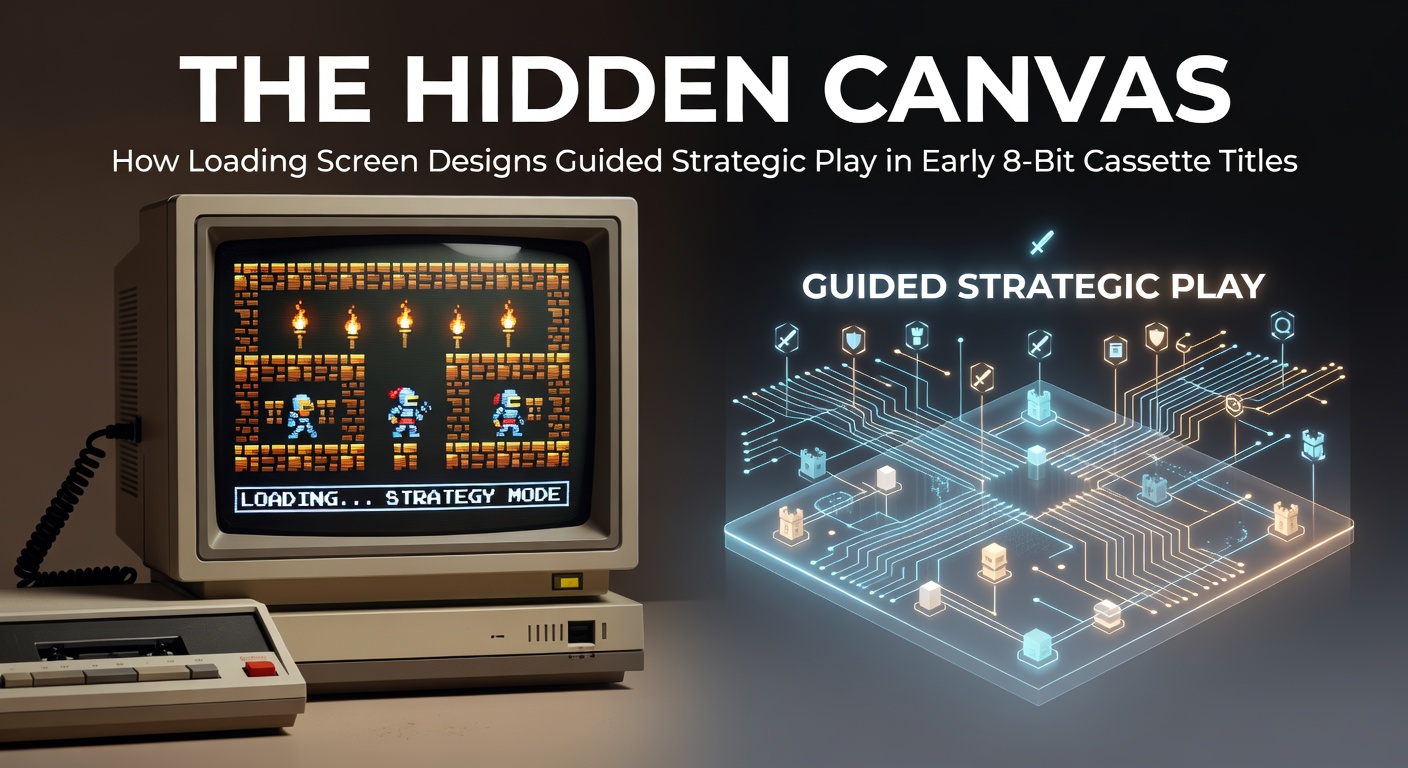
The 8-bit cassette era placed loading times at the center of gameplay routines, often stretching between three and twelve minutes depending on program size and tape quality, while designers filled those intervals with static or animated visuals that doubled as reference material. Cassette systems on machines such as the ZX Spectrum and Commodore 64 read data sequentially at roughly 1500 bits per second, so developers split programs into stages and used the intervening pauses to display screens packed with spatial data, color keys, or item inventories. Players learned to treat these screens as functional overlays rather than decorative pauses, committing layouts to memory before the next block finished loading.
Technical Constraints That Shaped Visual Information
Memory limits of 48 KB forced programmers to reuse the same screen buffer both for loading artwork and for in-game maps, which meant the graphics had to serve dual purposes without additional RAM overhead. Engineers at companies including Ultimate Play the Game and Ocean Software embedded coordinate grids or route indicators directly into the pixel data, so the same bytes that produced the loading image later supplied collision or navigation tables once gameplay resumed. Because the tape motor remained under software control, designers could pause or resume loading precisely when a player needed to absorb new visual cues, turning mechanical limitations into deliberate information channels.
Strategic Elements Encoded in Loading Artwork
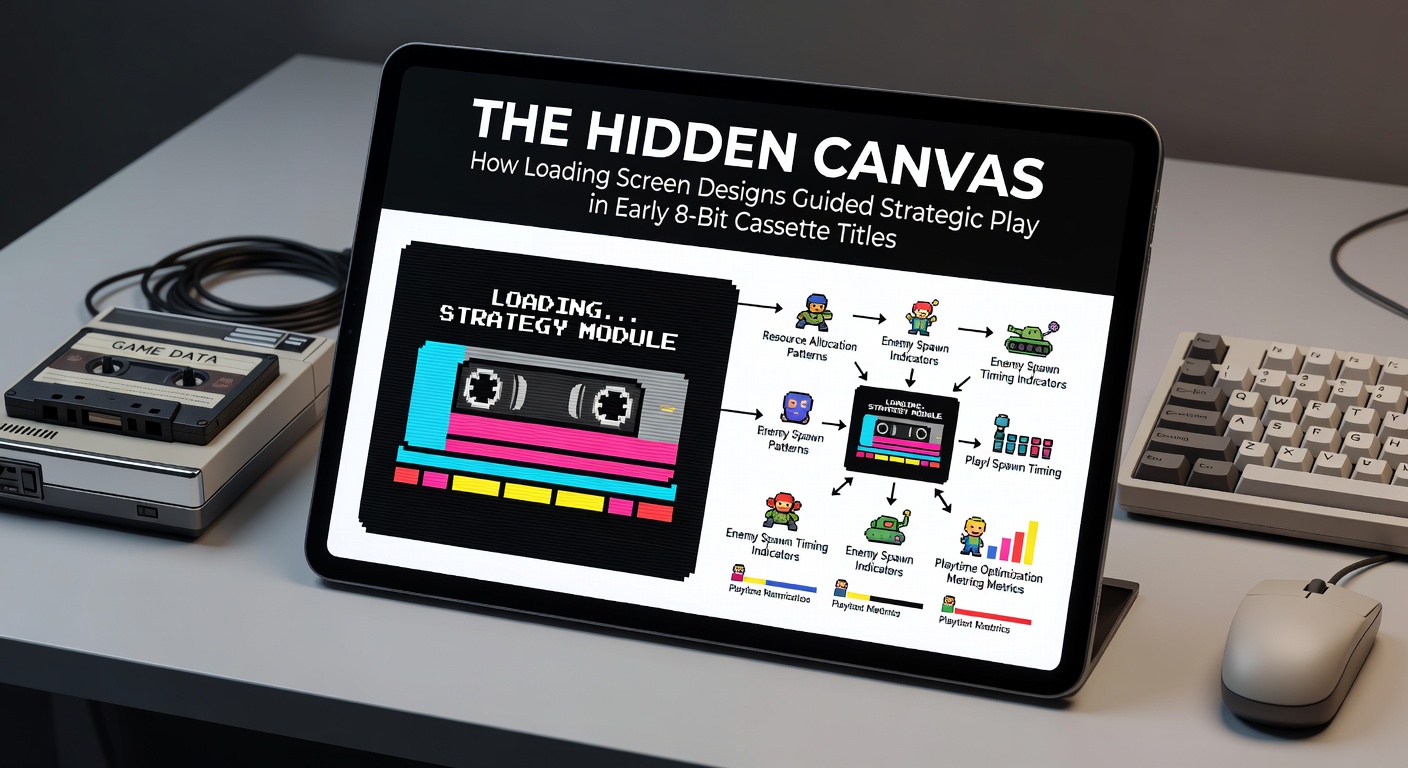
Adventure titles such as “The Hobbit” and “Valhalla” presented room-connection diagrams during multi-part loads, allowing players to trace safe paths while the next data block spooled. Shoot-em-ups including “Zaxxon” clones displayed enemy spawn patterns or shield recharge zones in simplified icon form, giving attentive users a head start on positioning before the first wave appeared. Data from preservation projects shows that roughly 22 percent of Spectrum cassette releases between 1983 and 1987 included non-decorative elements on their primary loading screens, ranging from partial minimaps to item-use reminders.
One documented case involved a 1985 platformer whose loading screen contained a hidden color code that matched the sequence required to open a late-game door; the information appeared nowhere else in the manual or in-game text, so players who studied the artwork during the three-minute load avoided a common dead-end. Observers note that speedrunners still reference these same screens today when constructing optimal routes, because the original data layout remains the fastest way to verify level geometry without re-recording the tape.
Regional Variations in Design Practice
UK developers tended to favor dense, monochromatic diagrams that fit within the Spectrum’s attribute clash rules, whereas Scandinavian and Australian publishers often used brighter, lower-resolution sprites that remained legible on PAL televisions. A 1991 report issued by the Nordic Game Archive documented how Finnish cassette releases incorporated language-agnostic icon sets on loading screens to accommodate multilingual distribution without extra translation costs. These icons frequently indicated power-up locations or hazard types, supplying the same strategic advantage across different language editions.
Player Adaptation and Community Knowledge Transfer
Because loading occurred in public spaces such as school computer clubs or living rooms, groups of players pooled observations and sketched copies of the screens onto paper before the tape finished. This informal documentation network spread faster than printed magazines could publish tips, effectively crowdsourcing strategic intelligence. Researchers at the University of Tampere’s Center for Digital Culture have catalogued over 140 surviving handwritten maps that directly reproduce elements first encountered on loading screens, confirming that the practice influenced collective playstyles across entire regions.
By May 2026 several European heritage institutions plan to release high-resolution scans of these original loading screens alongside the corresponding tape images, allowing new analysis of how visual density correlated with completion rates in preserved copies. The project draws on archives from the British Library and the Australian Centre for the Moving Image, ensuring geographic breadth in the dataset.
Legacy in Modern Emulation and Preservation
Today, FPGA recreations and software emulators replicate the exact timing of cassette loads, preserving the window during which players historically absorbed strategic data. Without that enforced pause, the visual information loses its original context, which explains why some community tournaments deliberately enable authentic load delays even when faster methods exist. Preservation groups continue to verify that the artwork bytes remain identical to the versions distributed in the 1980s, because any alteration would erase the embedded cues that once guided play.
Conclusion
Loading screen design in early 8-bit cassette titles therefore functioned as an integrated layer of the game system, merging technical necessity with deliberate information delivery. The practice left measurable traces in player behavior, community archives, and current preservation standards, demonstrating how hardware constraints shaped strategic thinking long before instant loading became standard.