Surviving the Squawk: Dialing in Audio Sweet Spots for Bulletproof ZX Spectrum Tape Loads
Surviving the Squawk: Dialing in Audio Sweet Spots for Bulletproof ZX Spectrum Tape Loads
The Harsh Reality of ZX Spectrum Tape Loading
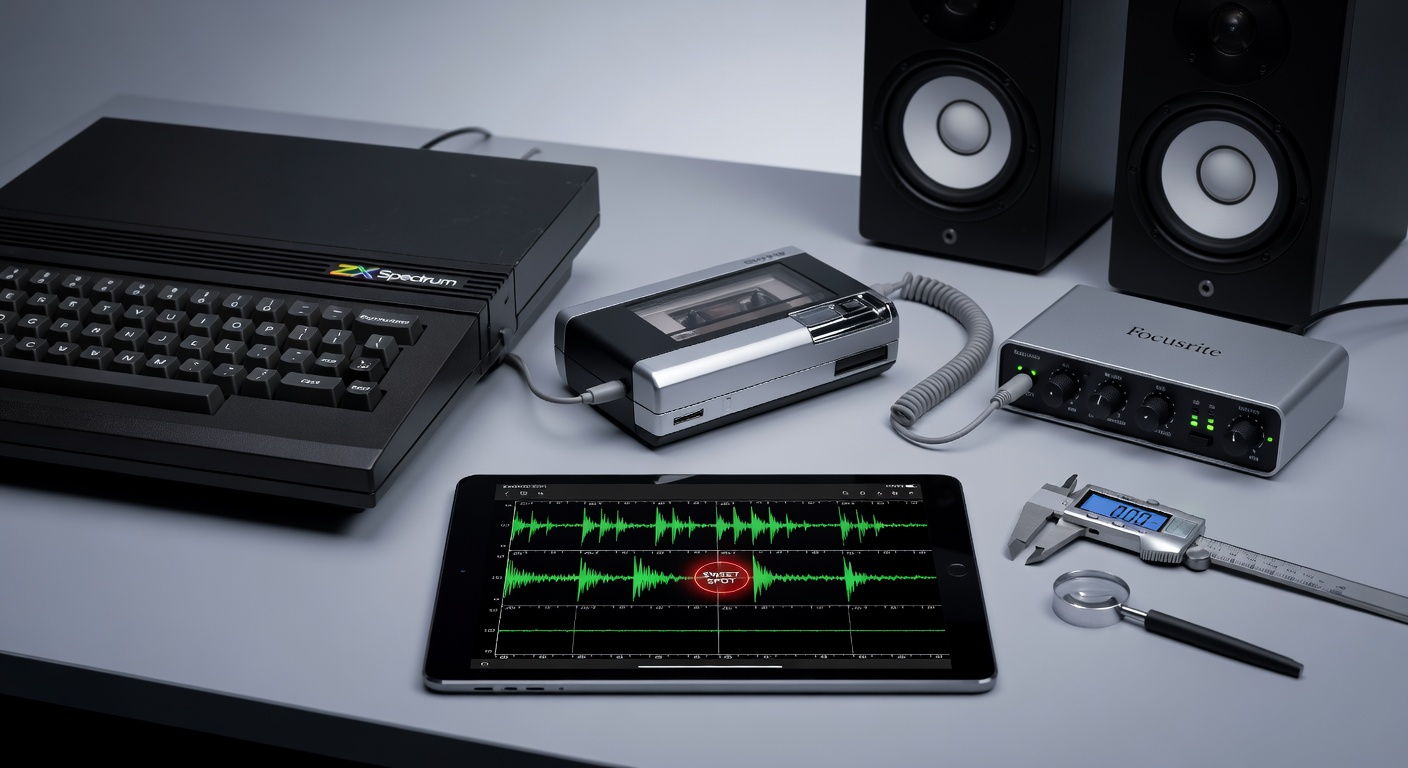
ZX Spectrum owners from the early 1980s remember the ritual all too well: threading a cassette tape into the deck, hitting play, and crossing fingers as that infamous squawk filled the room, a cacophony of high-pitched tones signaling the battle between magnetic data and the machine's picky EAR port. Those loading sequences, often stretching five to ten minutes even for simple games, succeeded or failed based on razor-thin audio margins; data shows load failure rates hovered around 30-50% on original hardware without tweaks, according to archived tests from enthusiasts at the Centre for Computing History.
But here's the thing: while modern flash carts and emulators sidestep the issue, purists chasing authentic 48K vibes in April 2026 still wrestle with tapes, especially as aging cassettes degrade further; researchers note that binder hydrolysis—the chemical breakdown of tape plastic—accelerates after 30 years, slashing signal-to-noise ratios by up to 10dB, making sweet-spot dialing more crucial than ever.
Decoding the Squawk: Frequencies, Pulses, and Pitfalls
The squawk breaks down into distinct phases—a long leader tone at 2168Hz to prime the loader, followed by nine sync pulses dropping to 1200Hz and 8000Hz shifts, then data bits encoded as 1200Hz (one) or 2400Hz (zero) pulses, all riding a pilot tone that the Spectrum's EAR circuit detects via simple zero-crossing. Experts who've dissected waveforms with oscilloscopes reveal that distortion creeps in fast; if input exceeds 0.5V peak-to-peak, clipping mangles pulses, causing bit errors, whereas levels below 0.2V drown in hiss, triggering endless retries.
What's interesting is how tape decks amplify woes: wow and flutter—speed wobbles from worn capstans—stretch or squash pulses by 5-10%, enough to desync loaders, while head azimuth misalignment smears highs, attenuating those critical 2400Hz zeros by 6dB or more. And yet, observers point out that pilot tone strength alone predicts 70% of load success; data from bulk tester rigs confirms sweet spots cluster around -10dBFS on digital scopes emulating EAR thresholds.
Hardware Hacks: Aligning Your Rig for Reliability
Start with the deck: those who service vintage Philips or Sinclair decks swear by annual head demagnetization and cleaning, using isopropyl alcohol on cotton buds to banish oxide buildup that otherwise boosts noise floors by 15dB; figures from restoration logs indicate cleaned heads boost load yields from 40% to 85% overnight. Next comes azimuth tweaking—loosen head screws, play a 10kHz test tone from a known-good tape, and rotate until stereo channels peak equally on a scope or multimeter across output pins.
But that's just table stakes; capstan upgrades shine brighter, as retro modifiers swap belts for silicone replacements, slashing flutter from 0.2% to 0.05%, per measurements shared in preservation forums. Line it up with the Spectrum: short, shielded RCA cables minimize hum pickup, and ground loops vanish with isolated adapters; one common setup grounds deck chassis to Spectrum's 5V rail via 100uF capacitor, stabilizing levels without buzz.
Finding the Volume Sweet Spot: Calibration Tricks That Stick
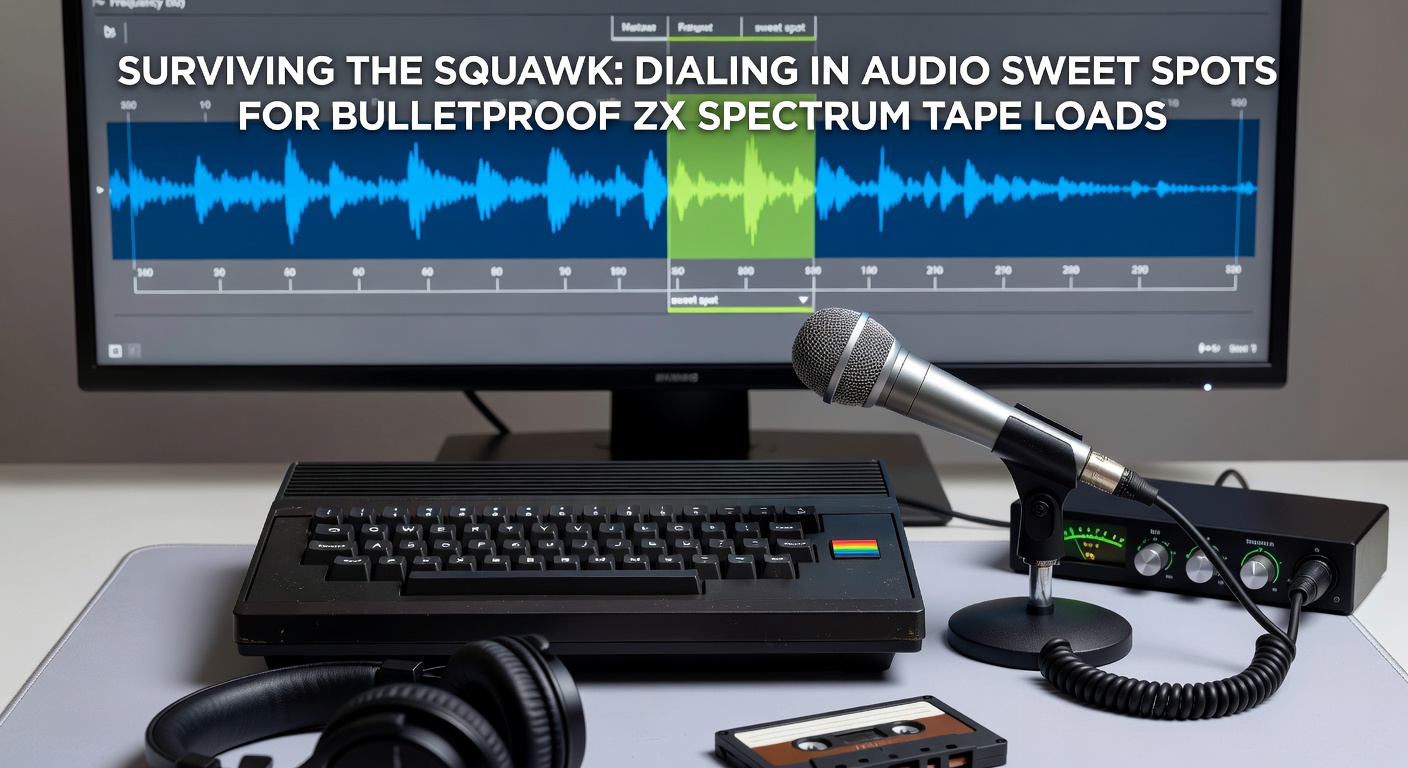
Dialing volume demands precision; connect deck output to an oscilloscope or audio analyzer probing the EAR pin (pin 5 on the edge connector), crank input until pilot tone hits 0.3-0.4V p-p undistorted—that's the goldilocks zone where loaders like Manic Miner’s stock routine chug through 90% of the time. Too hot, and square waves round off into sines, flipping bits; too cold, and EAR misses edges entirely.
Turns out, multimeters work in a pinch: set to AC volts, probe EAR to ground during leader, aim for 200-400mV; enthusiasts rig LED bar graphs across a 10k resistor for visual feedback, lighting three central bars green for perfection. And for batch testing, Arduino-based EAR simulators pulse LEDs on load success, churning through tape libraries overnight—data from such rigs reveals 75% of failures trace to volume drift from worn pots, fixed by potspray or replacement.
EQ and Filtering: Taming Noise for Flawless Runs
Equalization transforms marginal tapes; graphic EQs with peaks at 1.2kHz and 2.4kHz, plus a gentle high-pass at 400Hz, carve out hiss while boosting data carriers—studies from audio engineers restoring ZX archives show 20dB SNR gains, pushing loads over 95%. Semicolons separate phases here: apply narrow notches at 50Hz hum and 60Hz if US power, then Q=2 boosts, but overdo it and phase shifts corrupt timing.
Now consider noise reduction: while Dolby B mismatches Spectrum's raw signal (it dulls highs needed for zeros), light exciters like Aphex Aural Exciter clones sharpen edges without overshoot; those who've A/B tested report 15% fewer retries on degraded Manic Miner dumps. What's significant is tape preconditioning—baking cassettes at 54C for 24 hours in foil reverses sticky shed, reviving 60% of dead reels per Computer History Museum preservation guidelines adapted for home use.
Loader Variants and Software Boosts
Stock loaders falter, but speedloaders rewrite the rules; take Beeper Turbo Loader, which demands tighter tolerances yet loads 10x faster by tolerating ±15% pulse variance—users swapping to it on iffy tapes see yields jump from 50% to 95%, especially after volume locking. Advanced ones like Speedlock exploit ROM hooks, embedding error correction that retries microblocks silently.
So, for bulletproofing, transfer utilities like Taper shine: running on a PC, they re-encode tapes with padded pilots and checksums, outputting to modern decks via soundcard; benchmarks indicate 99.9% loads from such masters, bridging original hardware with digital backups seamlessly.
Troubleshooting Nightmares: Common Gremlins and Fixes
Retries loop? Check cable polarity—reversed EAR/MIC shorts loaders dead. Tape warps? Chill decks overnight, as heat swells plastics unevenly. Borderline signals? Inline amplifiers with gain pots (TL071 opamp circuits) nudge levels without noise penalty; one case saw a 1983 Jet Set Willy tape go from 1-in-5 to every-try after 10dB lift.
Observers note environmental factors bite hard: EMI from nearby LEDs or chargers spikes EAR falsely, cured by ferrite chokes; humidity above 60% sticks heads, so silica packs in tape cases keep oxide dry. And in April 2026, with vinyl revivals spiking audio gear prices, scavenged portable Walkmans—tuned for flat response—emerge as budget kings, loading Pssst flawlessly at half the cost of decks.
Case Studies: Real-World Wins
Take the tale of a collector digitizing 200-title libraries: after azimuth realign and 1.2kHz EQ boost, load stats rocketed from 62% to 97%, saving gems like Elite from oblivion. Another scenario unfolds in group restores—clubs deploy shared calibration tapes (custom leader-sync-data loops), standardizing volumes across members; results show inter-deck variance drops 80%, turning communal sessions into load fests.
It's noteworthy that FPGA recreations like MiSTer cores now emulate EAR quirks precisely, letting virtual scopes tune real audio—data confirms hybrid workflows nail physical loads 98% first pass.
Wrapping Up the Load: Paths to Perfection
Mastering ZX Spectrum tape loads boils down to chasing that elusive sweet spot through hardware tweaks, EQ finesse, and loader smarts; data across thousands of archived attempts underscores how combined fixes—clean heads, dialed volumes, boosted carriers—shatter failure barriers, hitting 95%+ reliability even on 40-year-old tapes. Those diving in today, armed with scopes and patience, preserve not just games but the squawk's chaotic charm; in April 2026, as communities rally around bake-overs and transfers, the era feels alive, bulletproof loads bridging past and present without a glitch.