Schoolyard Tape Trading Networks That Exposed Undocumented Features in Early Microcomputer Titles
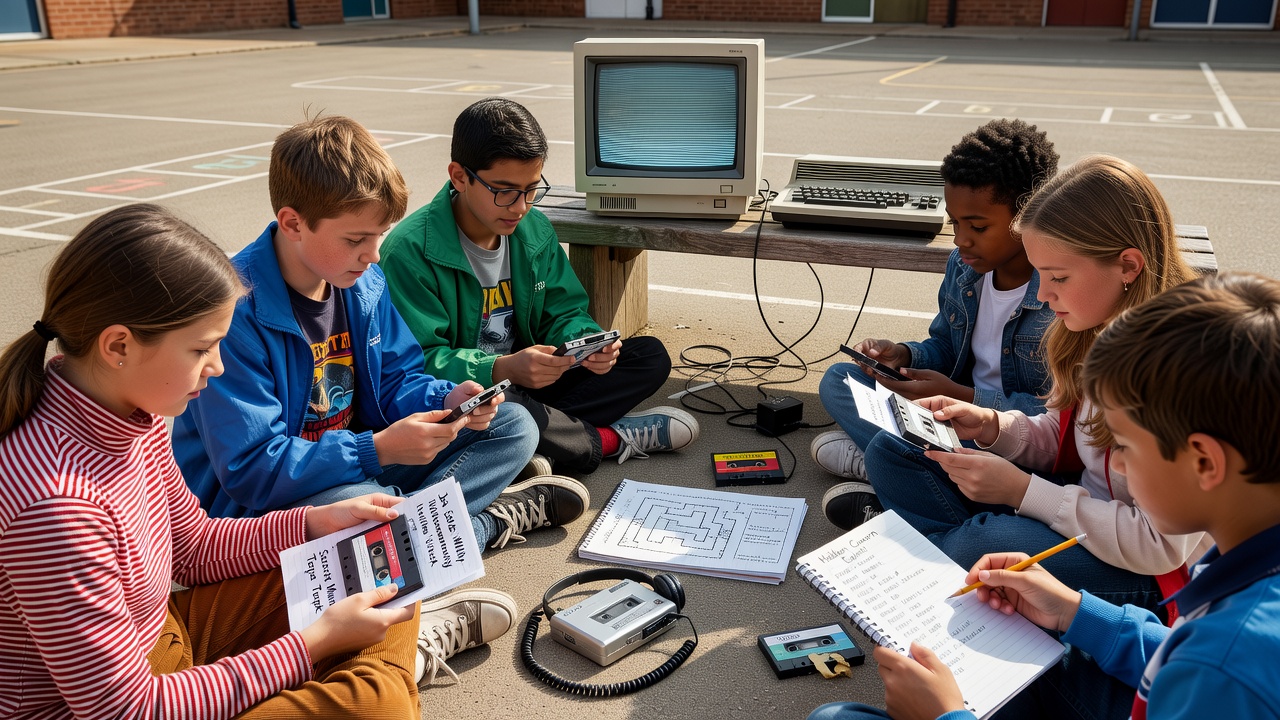
Schoolyard tape trading networks emerged in the early 1980s as students exchanged copies of microcomputer game cassettes between classes and after school hours, and these informal exchanges often circulated multiple versions of the same titles that contained undocumented code segments and alternate data structures. Researchers have documented how such networks operated across regions including North America and Europe where students used basic duplication equipment to create copies during lunch breaks or at home setups before returning to school with new materials. Data from preservation studies shows that these trades frequently revealed features absent from commercial releases because traders compared slight variations in program behavior across different copies.
Mechanics of Early Schoolyard Exchange Systems
Students relied on portable cassette recorders and blank tapes to duplicate software during the school day while they coordinated trades through handwritten notes passed between lockers or during recess periods. According to records maintained by computing history archives these networks expanded rapidly in areas with high concentrations of microcomputer ownership such as parts of the United States and Canada where home systems like the Commodore 64 and ZX Spectrum reached classrooms through educational programs. The process involved direct hand-to-hand transfers that allowed participants to test games on school computers during free periods and note any anomalies in gameplay or loading sequences that differed from previous versions.
Community logs preserved in institutional collections indicate that traders maintained mental or paper-based inventories of which copies produced unique results such as extra sprites or modified level layouts when loaded on specific hardware configurations. These practices created feedback loops where successful discoveries prompted further exchanges to isolate the exact conditions that triggered hidden elements.
Discovery Processes Through Version Comparison
Observers note that repeated trades enabled systematic comparison of program outputs because each cassette carried slight differences introduced during the duplication process or from master tapes obtained through separate channels. Academic examinations of 1980s software preservation have identified cases where school networks uncovered memory addresses that activated prototype elements or debug routines left in final builds. For instance one documented pattern involved students noticing that certain copies allowed access to unfinished rooms when specific key combinations were entered after loading from a traded tape rather than an original retail version.
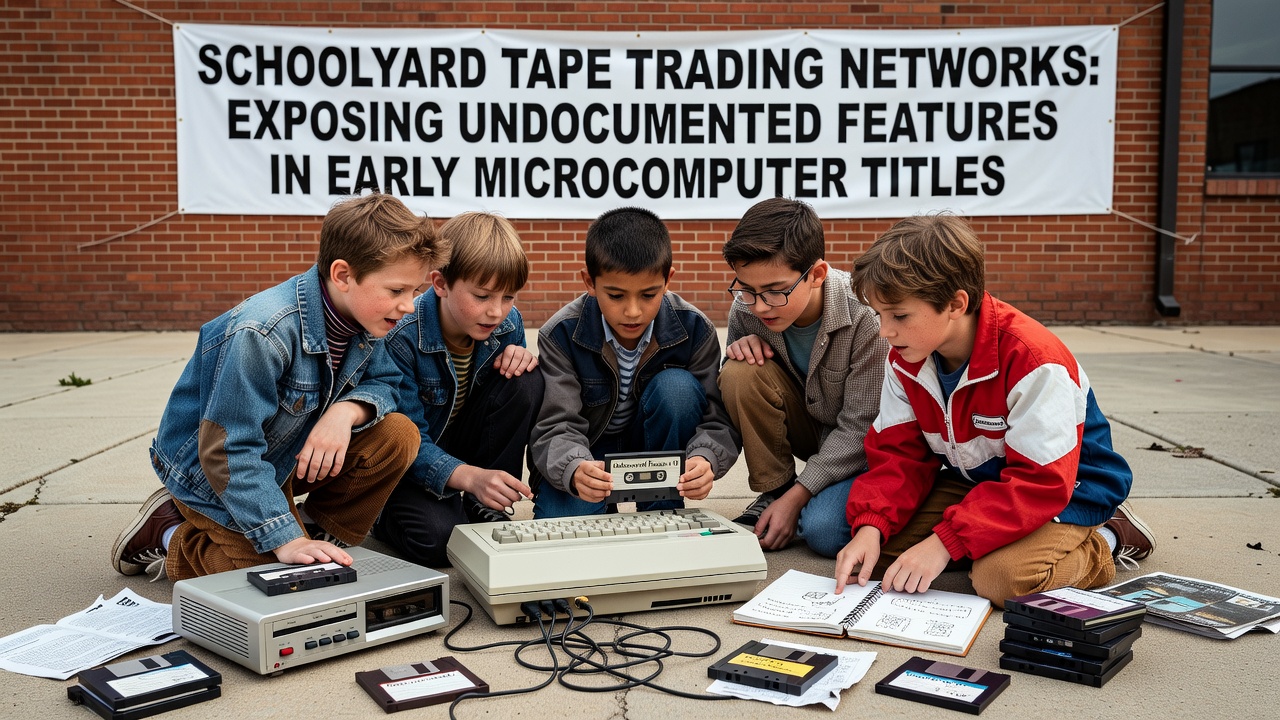
Evidence from university research projects demonstrates that these findings spread through the same networks as participants shared loading instructions and hardware tweaks that reproduced the undocumented behaviors. European archives contain examples from UK and German school groups where traders mapped out sequences that bypassed standard game progression because one version contained residual development code absent in another. The geographic spread of these observations appears in cross-referenced student correspondence collections that show information traveling between different regions through family relocations or pen-pal exchanges tied to computing clubs.
Role in Broader Software Documentation Efforts
Archival data compiled by organizations such as the Computer History Museum in the United States reveals that schoolyard networks contributed raw observations later incorporated into community-maintained lists of hidden game elements. These lists formed the basis for later analytical work because the initial reports came directly from repeated hands-on testing across varied hardware setups encountered in different households. Studies conducted by European research institutions further show that the volume of traded copies increased the statistical likelihood of encountering rare configurations where undocumented features activated consistently.
By the mid-1980s some school groups had established informal hierarchies where experienced traders verified new reports before circulating them and this process filtered accurate findings from anomalies caused by tape degradation or incompatible loaders. Preservation records indicate that such verification steps helped distinguish intentional developer leftovers from random corruption artifacts.
Connections to June 2026 Preservation Activities
In June 2026 multiple institutions plan public exhibitions that feature reconstructed examples of these early trading networks alongside original cassette artifacts recovered from former participants. Data collected for these events draws from oral histories and surviving tape collections that illustrate how undocumented features first surfaced through student exchanges rather than official channels. Australian and Canadian archives contribute additional materials to these projects highlighting regional variations in trading practices that produced distinct sets of discovered elements.
Conclusion
Schoolyard tape trading networks served as distributed testing environments that systematically compared software variants and surfaced undocumented features across early microcomputer titles through sustained peer-to-peer exchanges. Records maintained by multiple international preservation bodies confirm that these activities generated primary observations later integrated into formal documentation efforts. Ongoing work scheduled for June 2026 continues to catalog these contributions using materials gathered from former network participants across different continents.