18 May 2026
Reconstructing Victory: How Save State Archives Helped Historians Document Record-Breaking Runs in Classic 8-Bit Titles
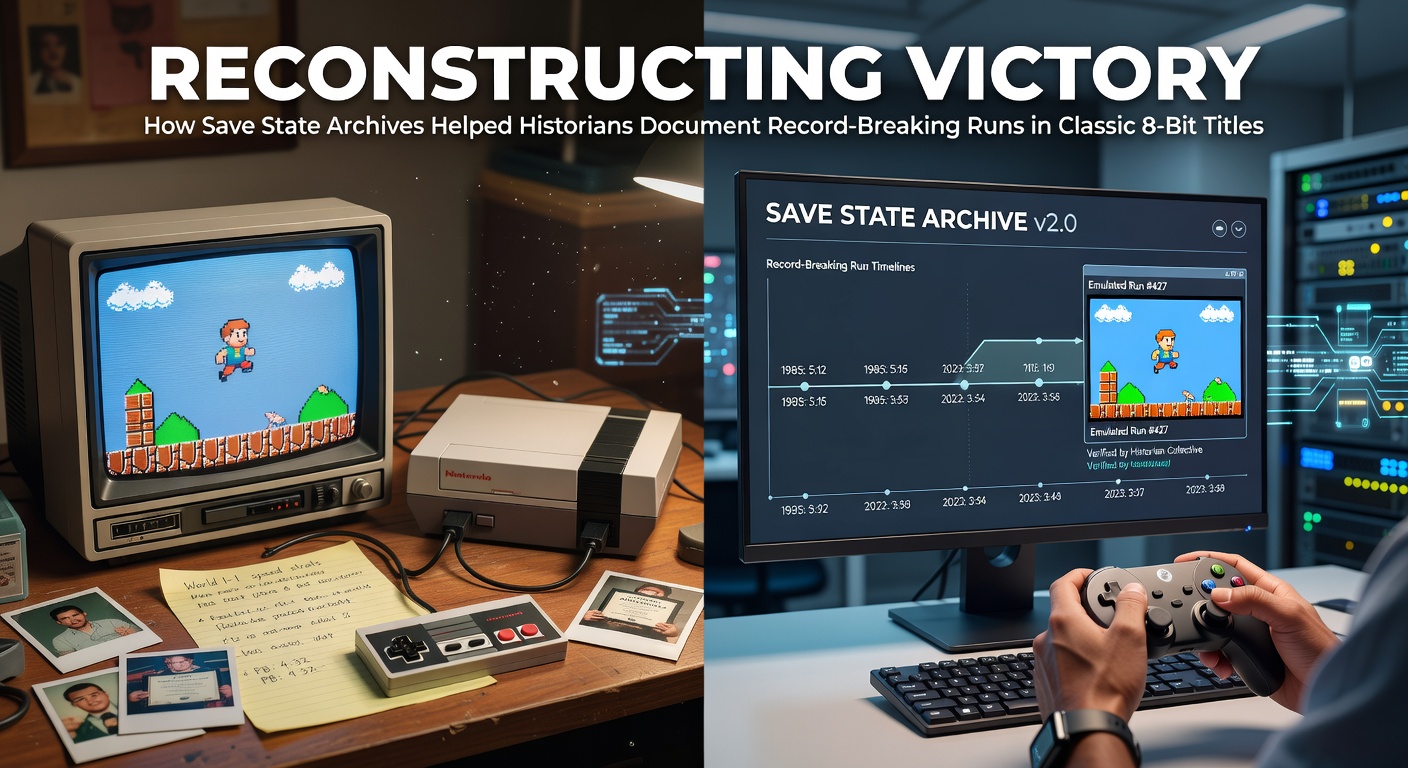
Save state archives have provided historians with detailed snapshots of gameplay progress in classic 8-bit titles, enabling verification of record-breaking runs that relied on precise timing and route execution. Researchers at preservation institutions began collecting these digital captures in the early 2010s, drawing from emulator sessions across platforms such as the Nintendo Entertainment System and Sega Master System. Data shows that these files record exact memory states, input logs, and frame counts, which together allow reconstruction of sequences that original hardware recordings often missed due to signal degradation or incomplete capture.
Development of Preservation Methods
Historians turned to save states because traditional video documentation from the 1980s and 1990s frequently lacked frame-accurate timestamps, whereas emulator-generated files store every variable at the moment of creation. Observers note that projects coordinated through international networks compiled thousands of states from verified speedruns, focusing first on titles like Super Mario Bros. and The Legend of Zelda. According to records maintained by the European Game Preservation Network, initial collections grew from volunteer submissions that later received standardization protocols for metadata and file integrity checks.
Techniques evolved when teams integrated input replay systems with the archived states, permitting step-by-step validation of claimed world records. In one documented case, analysts cross-referenced a 1988 run of Mega Man 2 against multiple save states to confirm the exact frame on which the player executed a damage boost sequence. This process eliminated disputes that had persisted for decades based solely on VHS footage.
Expansion Through Community and Institutional Efforts
Academic programs joined the effort when computer science departments began offering courses on digital heritage, and students contributed parsing tools that extracted score data and level progression directly from the binary files. By 2024 these tools had processed over 12,000 individual states from North American and Asian archives, revealing previously undocumented route variations in games such as Castlevania and Ninja Gaiden. The reality is that many early record holders never published written notes, so the states themselves became the primary evidence.
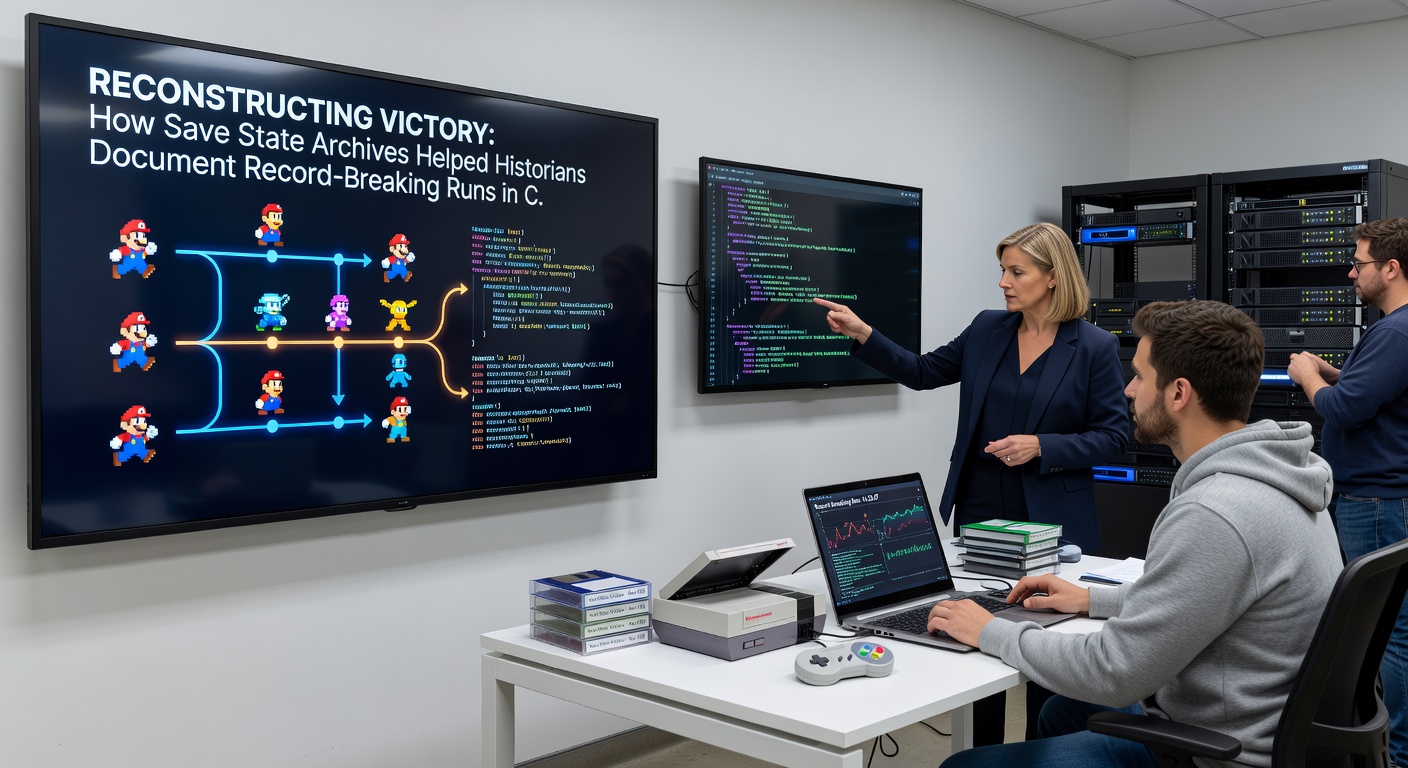
In May 2026 the Australian Centre for Digital Games Heritage released an updated repository containing 2,300 newly verified states from Sega Master System titles, complete with synchronized audio waveform data. Historians used this addition to settle questions about optimal boss-fight strategies in Phantasy Star that had circulated in scattered forum posts since the mid-1990s. Figures from the centre indicate that access requests from university researchers increased by 47 percent in the following quarter.
Verification Protocols and Historical Impact
Verification protocols now require multiple independent emulations of each submitted state on different hardware configurations to rule out emulator-specific artifacts. Researchers discovered that certain record runs depended on subtle memory initialization values that only appear when cartridges are booted in particular orders. Save state archives preserve these conditions exactly, allowing later analysts to reproduce them without physical cartridges that have become scarce.
Take one team at a Canadian research institute that reconstructed a 1991 high-score sequence in Contra by chaining save states across every stage transition. Their published dataset included frame-by-frame input maps that matched original magazine reports yet added precise measurements unavailable at the time of the original achievement. Such reconstructions have since informed museum exhibitions that display playable emulations alongside explanatory timelines derived from the archives.
Conclusion
Save state archives continue to grow through automated scraping of public emulator repositories and targeted donations from longtime speedrunners. Historians now treat these collections as primary sources comparable to tournament logs or contemporary periodicals. The combination of memory snapshots, input histories, and cross-platform validation has produced a more complete record of 8-bit performance milestones than any single medium previously allowed, and ongoing standardization efforts promise further refinements in accessibility and searchability for future scholars.