Margin notes and memory maps: amateur annotations that reshaped navigation in amstrad cpc adventures
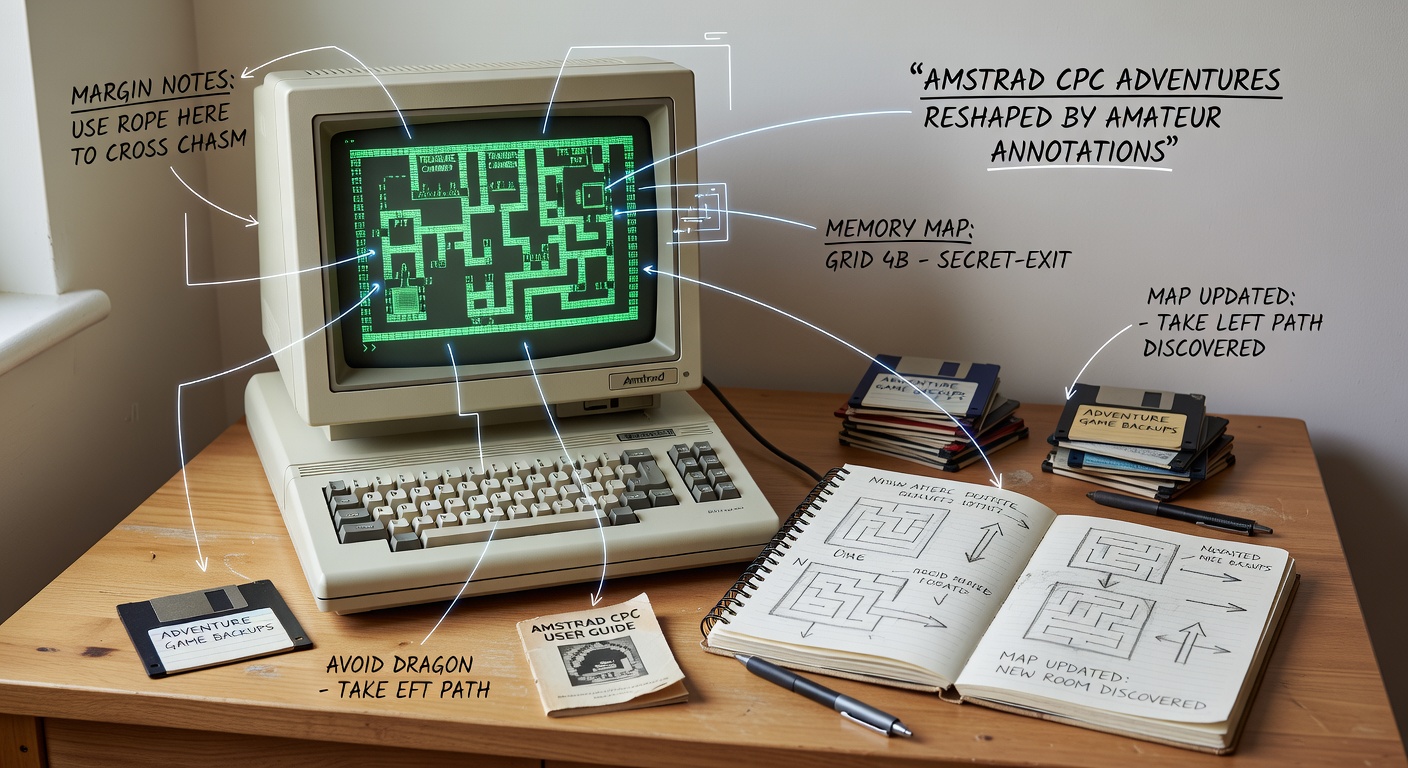
Amstrad CPC adventures from the mid-1980s onward relied on text parsers and limited graphics that demanded careful tracking of locations, items, and clues, yet official documentation often left gaps that players filled through personal annotations. Those who studied these games documented how handwritten margin notes in manuals and hand-drawn memory maps became essential tools for navigation in titles distributed on cassette and disk.
Amstrad CPC Adventure Games and Their Navigation Demands
Games such as The Pawn, Guild of Thieves, and later entries in the Magnetic Scrolls lineup ran on the Amstrad CPC platform with its distinctive color palette and 64K or 128K memory configurations. Players encountered sprawling fictional worlds where exits changed based on state variables, and puzzle solutions hinged on carrying specific objects through multiple screens. Data from preservation archives shows that early releases provided only basic command lists and minimal maps, which forced individuals to create their own reference systems during extended play sessions.
Researchers at European computing history projects have recorded how the CPC's tape-based loading process encouraged repeated restarts, turning each session into an opportunity to refine personal notes. Community collections reveal that annotations often appeared in pencil or colored ink alongside printed paragraphs, marking verb synonyms, object locations, and conditional responses that the parser accepted only under precise circumstances.
Margin Notes as Practical Record-Keeping Tools
Amateur players wrote directly in the margins of game manuals because printed instructions rarely covered every synonym or edge case that the interpreter recognized. Observers note that these notes typically listed alternative commands tested during play, along with reminders about inventory limits and timer events that reset upon reload. Figures from retro computing surveys indicate that such annotations appeared most frequently in manuals for games released between 1985 and 1989, when adventure titles dominated the CPC software charts.
One documented case involves a set of annotated manuals preserved in private collections where owners recorded exact phrasing required to bypass certain obstacles, including abbreviations that later circulated among local user groups. These personal additions transformed static booklets into dynamic references that reflected actual gameplay patterns rather than developer assumptions.
Memory Maps and Spatial Understanding
Hand-drawn memory maps emerged as players sketched room connections on graph paper or the backs of cereal boxes, assigning coordinates to locations and noting one-way exits that official documentation omitted. According to records maintained by the National Library of Australia digital heritage initiative, these maps frequently incorporated color coding to distinguish safe areas from hazard zones and used symbols for locked doors or movable objects.
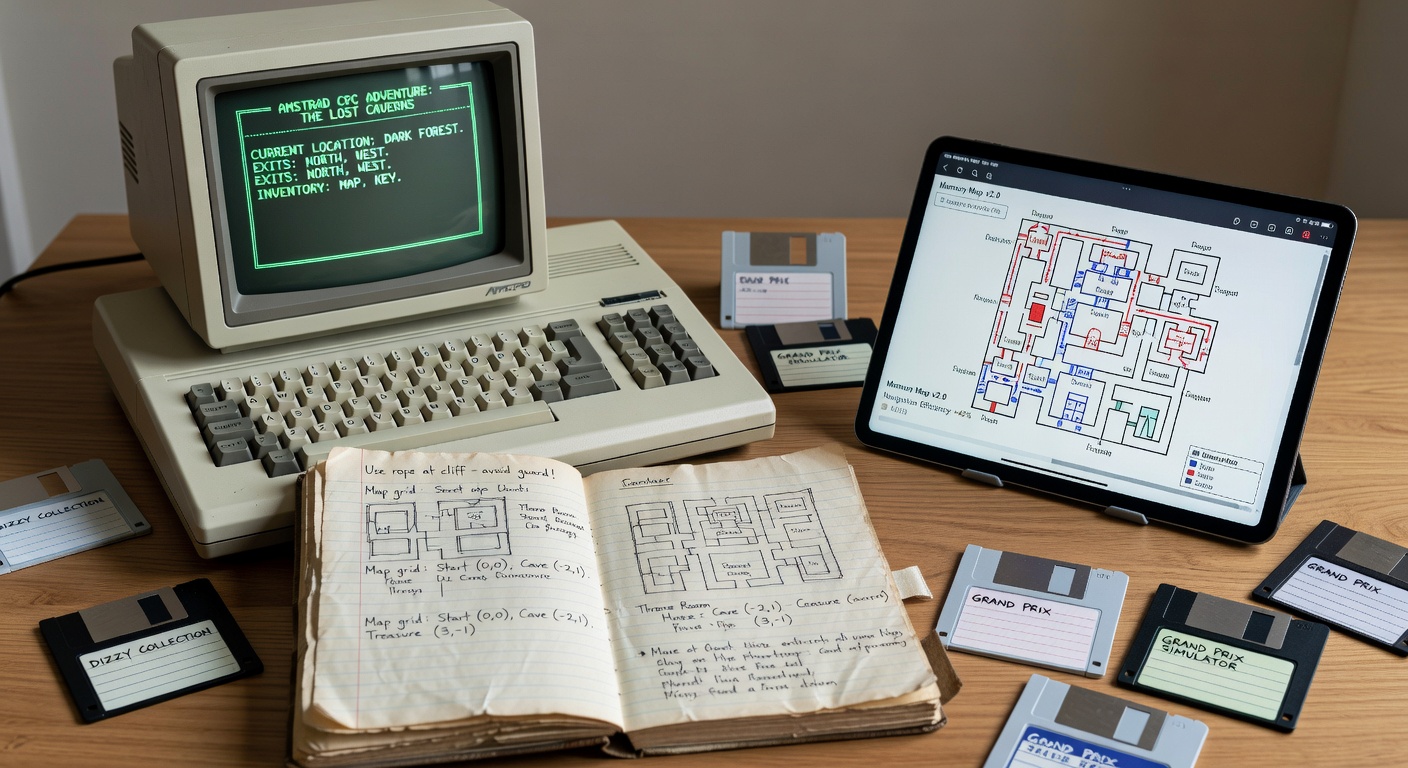
Those who've examined surviving examples observe that maps often included grid references tied to specific save positions, allowing players to resume exploration without retracing every step. The practice spread through school computer clubs and magazine letter pages, where contributors shared simplified versions that reduced complex layouts to essential pathways. Data collected by university-led oral history projects in North America confirms that map-making sessions commonly occurred during group play events, with multiple participants contributing details from separate playthroughs.
Community Exchange and Lasting Influence
Annotations and maps circulated beyond individual households once photocopiers became accessible in libraries and offices during the late 1980s. Preservation groups report that shared copies helped newcomers bypass early frustration points, effectively extending the playable lifespan of titles that might otherwise have been abandoned. What's notable is how these amateur resources sometimes influenced later commercial releases, as developers incorporated more detailed in-game mapping aids after observing player-created solutions.
By the time digital scanning projects began digitizing physical media in the 2000s, collections of annotated manuals and maps provided primary evidence of how navigation strategies evolved. Community archives continue to catalog these materials, with new digitization efforts scheduled for release in May 2026 that will make additional examples available for comparative study across European and North American collections.
Conclusion
Margin notes and memory maps represent a grassroots response to the navigational challenges inherent in Amstrad CPC adventures, where limited official support met with player ingenuity. These annotations documented real gameplay patterns, facilitated knowledge transfer among enthusiasts, and contributed to the broader record of how microcomputer gaming communities adapted to technical constraints of the era. Ongoing preservation work ensures that such materials remain accessible for future analysis of early interactive fiction practices.