Local computer club gatherings that compiled player-submitted timing charts for optimizing joystick inputs across foundational 8-bit entertainment software
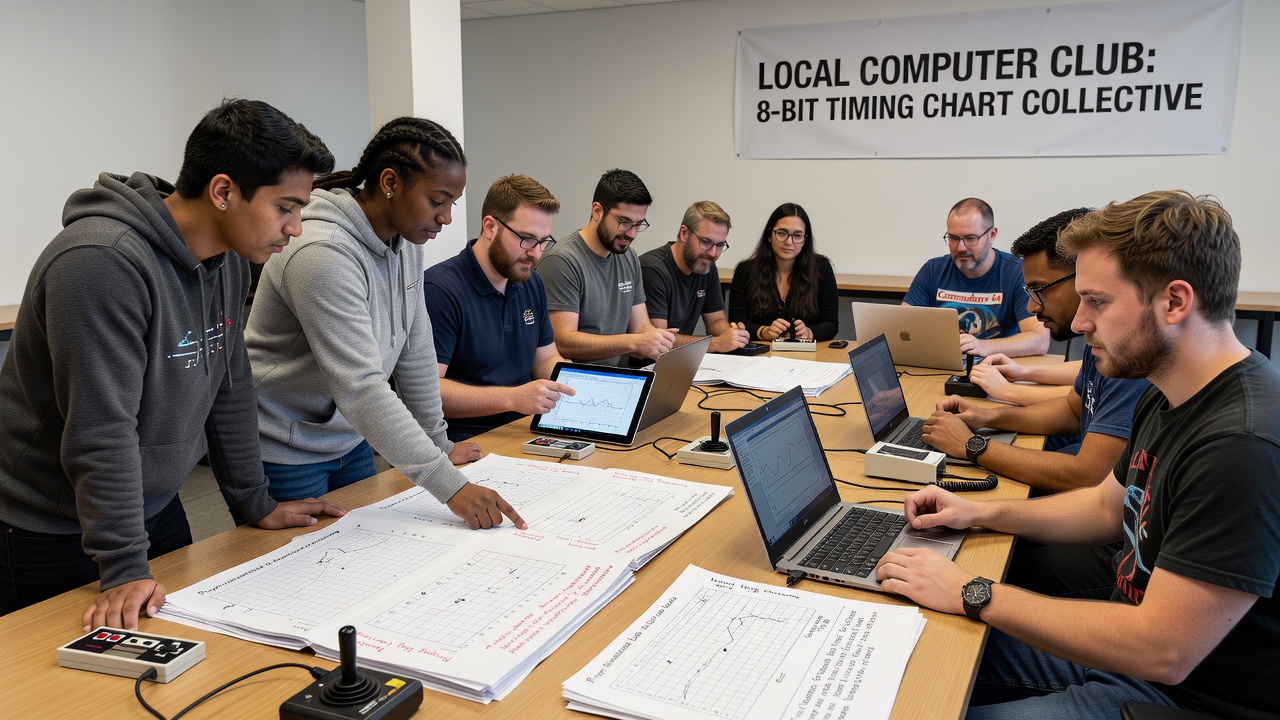
Local computer clubs in the early 1980s served as central points where enthusiasts exchanged detailed timing charts designed to refine joystick inputs on systems such as the Commodore 64, Atari 800, and ZX Spectrum, and these gatherings focused on foundational titles including early platformers and shooters where precise control windows determined success or failure.
Participants collected data from repeated play sessions, recorded exact frame counts between stick movements, and compiled the results into shared documents that reduced input lag and improved consistency across different hardware revisions. Studies from the Computer History Museum show that such charts often listed optimal pulse durations measured in milliseconds, allowing players to synchronize actions with the 50Hz or 60Hz refresh rates common to those machines.
Origins of Club-Based Chart Compilation
Clubs formed in community centers, schools, and libraries across North America and Europe, and members arrived with notebooks filled from home experiments on their own machines. One group in Toronto documented over 200 individual timing entries for a single scrolling shooter during weekly meetings in 1983, while similar efforts in Melbourne tracked frame-perfect sequences for ladder-climbing mechanics in platform titles.
Data collection relied on player-submitted sheets that included joystick deflection angles, button press durations, and recovery intervals between inputs, and coordinators then cross-referenced submissions to identify consistent patterns that worked across multiple console variants. According to records maintained by the European Association for the Preservation of Digital Games, clubs in the UK and Germany exchanged these charts through printed newsletters that circulated among affiliated groups by 1984.
Methods for Timing Chart Development
Players tested inputs on unmodified hardware first, then adjusted for variations in joystick potentiometers and debounce circuits, and the resulting charts used tables with columns for action type, required timing window, and observed success rate. Groups often employed stopwatches synced to screen flicker or early logic probes attached to port lines to capture precise intervals.
Verification occurred during live demonstrations at meetings, where members replicated submitted timings on club machines and noted any deviations caused by power supply differences or cartridge contact resistance. Charts frequently incorporated footnotes that flagged hardware-specific adjustments, such as adding 16-millisecond delays for certain Atari 2600-compatible sticks used on 8-bit computers.
Impact on Gameplay Optimization
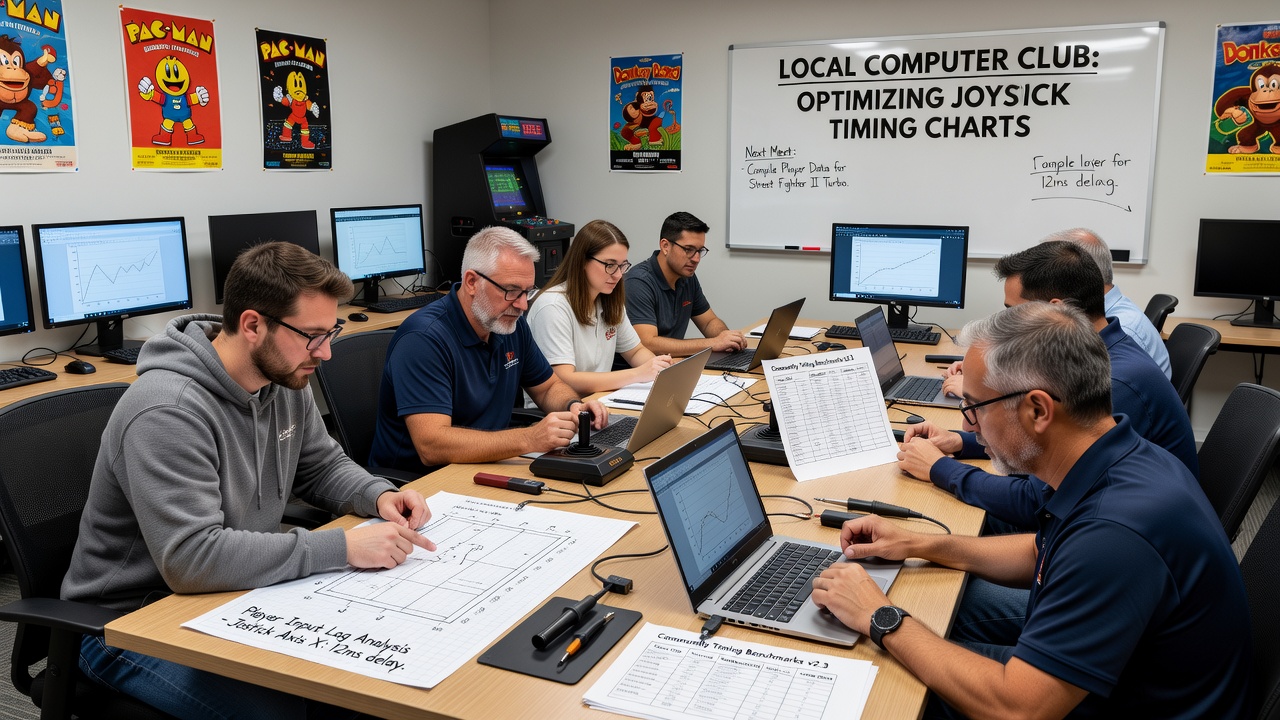
Optimized charts allowed competitive players to achieve higher scores by executing sequences that exceeded standard manual recommendations, and club archives contain examples where timing refinements increased completion rates for difficult stages in foundational action games by measurable margins. Observers note that these documents also highlighted edge cases, such as simultaneous diagonal inputs that triggered hidden behaviors in certain 1982 and 1983 releases.
Distribution remained local until photocopied bundles began traveling through informal mail networks, and by the mid-1980s some regional federations consolidated charts into larger reference binders that covered dozens of titles. Research compiled by the National Library of Australia indicates that these resources influenced later strategy guides published in commercial magazines.
Continuation and Archival Efforts
Interest in original timing methods resurfaced in the 2000s as emulation communities sought authentic input models, and several clubs digitized their surviving chart collections for online archives. Gatherings scheduled for June 2026 in multiple cities plan to revisit these documents with modern measurement tools while preserving the original hand-recorded data formats.
Contemporary sessions compare historical charts against high-speed video captures, and participants cross-check results against preserved 8-bit hardware to validate entries that originally relied on subjective player reports. This process continues to reveal minor discrepancies that earlier compilers could not detect without access to frame-accurate recording equipment.
Conclusion
Local computer club gatherings established systematic approaches to joystick timing documentation that supported optimization across early 8-bit software libraries, and the compiled charts remain reference points for historians and preservationists examining input mechanics from that era. Ongoing archival work ensures these player-generated resources continue to inform accurate reconstructions of foundational gameplay techniques.