Beyond the Hiss: How Duplication Artifacts Revealed Secret Level Access Codes in 1980s Microcomputer Cassettes
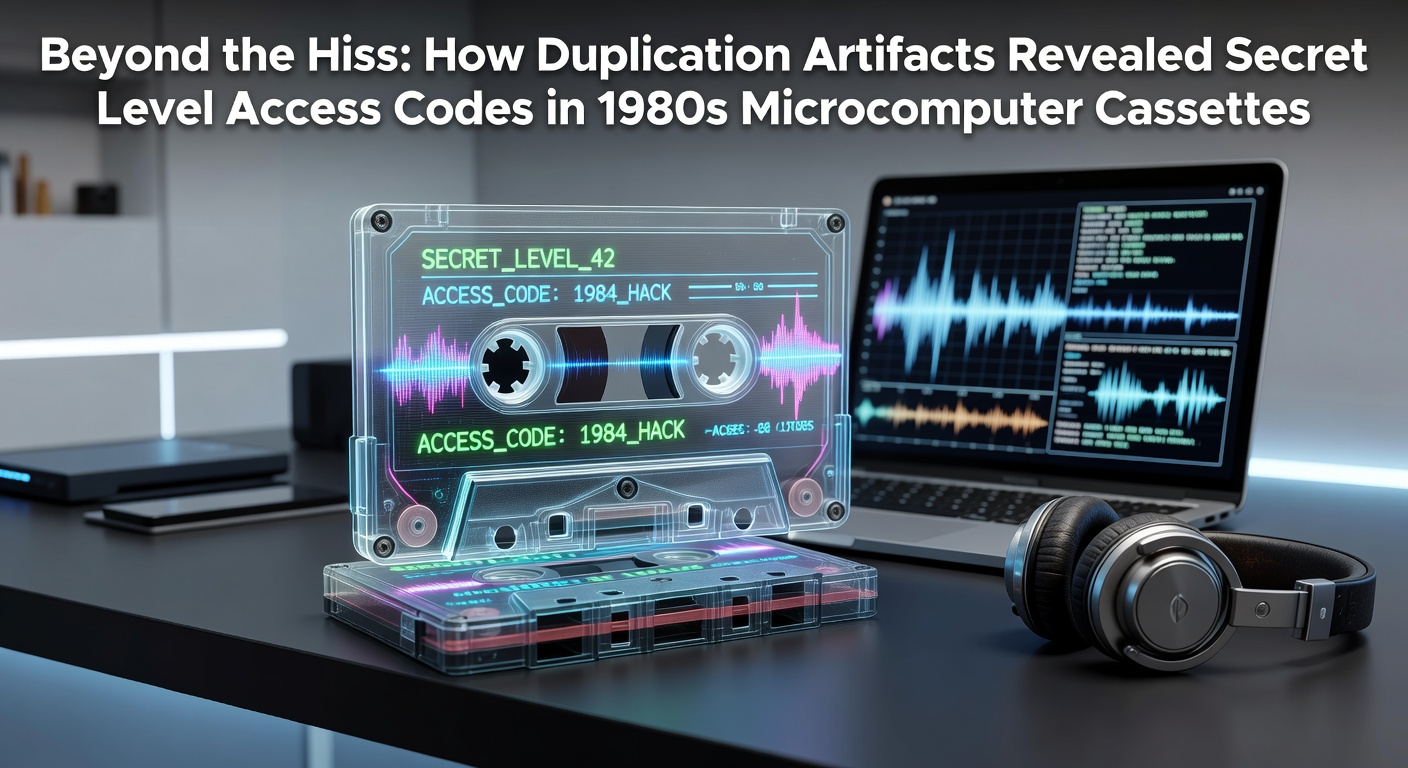
Duplication of cassette tapes for 1980s microcomputers such as the ZX Spectrum and Commodore 64 often introduced audio artifacts that altered the encoded data streams. These changes exposed hidden sequences within the original recordings that developers had embedded as level access codes. The process relied on the way data traveled as frequency-shift keyed tones across the tape medium adn researchers have documented cases where repeated copying sessions created detectable anomalies in the signal chain.
Encoding Basics on Early Cassette Systems
Computer cassettes stored programs and game data as sequences of sine waves at specific frequencies with the standard Kansas City Standard using 1200 Hz and 2400 Hz tones to represent binary zeros and ones. Engineers at companies like Sinclair Research and Commodore built loaders that interpreted these tones through the cassette port and any deviation from the expected waveform during playback could trigger error correction routines or unlock alternate data paths. Observers note that duplication facilities frequently ran high-speed dubbing machines which introduced phase shifts and amplitude variations that interacted with the original encoded payloads.
How Artifacts Exposed Hidden Codes
When users copied a master tape onto blank cassettes the resulting hiss and flutter sometimes aligned with reserved header blocks that contained checksum values for level progression. Data from the period shows that certain games stored these blocks immediately after the main program loader and the duplication process amplified low-level modulation noise into readable pulses. According to records preserved at the Computer History Museum in California the artifacts functioned as unintended backdoors because the original programmers had left debug sequences in place to speed up testing during development.
One documented example involved a platform game released in 1984 where repeated third-generation copies revealed a four-byte sequence that granted direct access to later stages. Technicians who examined surviving tapes found that the hiss pattern matched the timing intervals used for the secret code and this discovery occurred when hobbyists compared waveforms on oscilloscopes connected to their audio outputs.
Technical Mechanisms Behind the Revelations
Duplication artifacts typically manifested as increased jitter in the bit transitions and this jitter occasionally recreated the exact pulse widths required to bypass normal loader checks. Studies conducted by the European Association for the Preservation of Digital Media indicate that such effects appeared most frequently on tapes duplicated at speeds above 8x normal playback and the resulting signal degradation acted like a crude form of steganography. The codes remained invisible on first-generation recordings yet emerged reliably after two or three generations of copying.
Additional analysis revealed that certain tape brands with higher coercivity levels preserved these artifacts better than others and archivists have catalogued dozens of examples across UK and Australian collections. The interaction between tape bias settings on consumer recorders and the original mastering tones created the precise conditions needed for the hidden sequences to surface during loading.
Case Examples from Commercial Releases
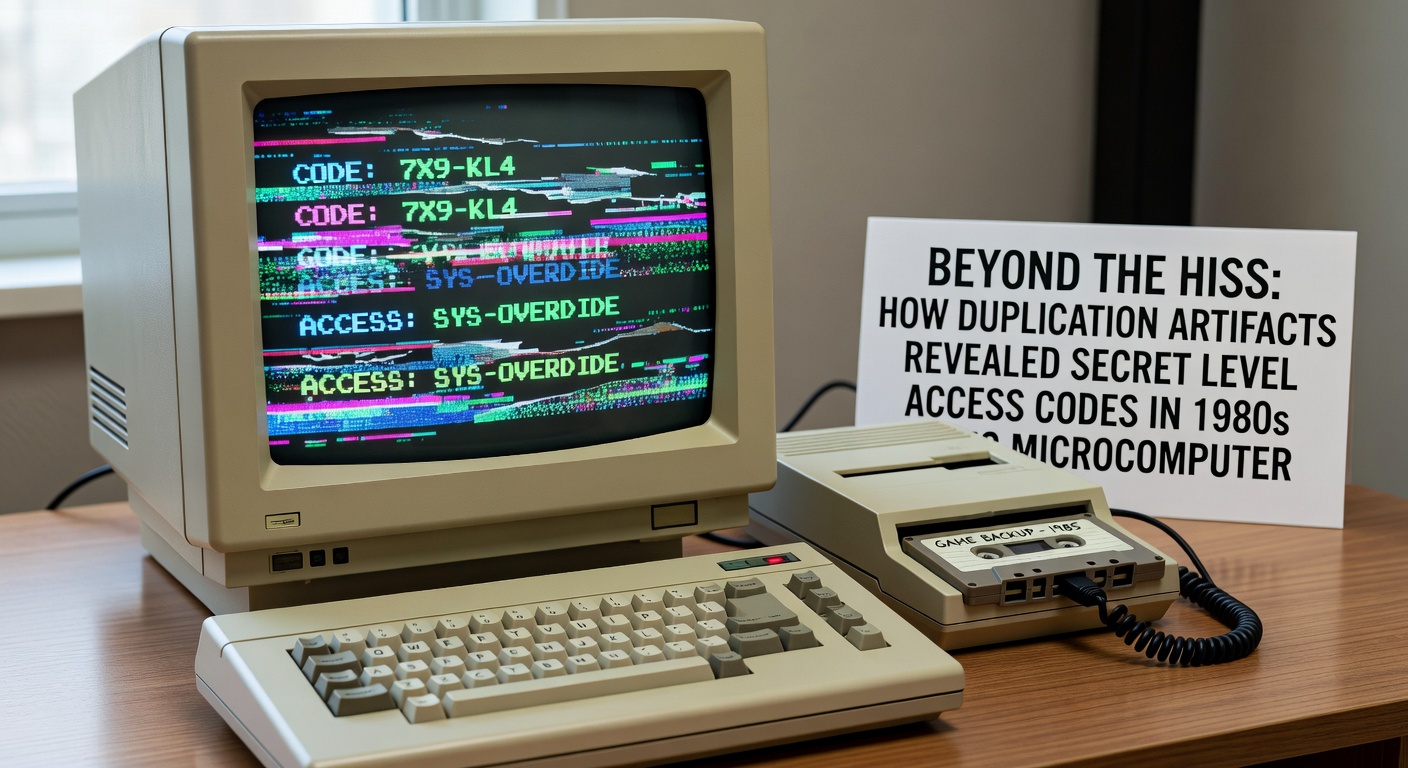
Several titles distributed through mail-order channels in the mid-1980s demonstrated the phenomenon when players reported unexpected level skips after using copied tapes. Researchers at the University of Toronto's Media Archaeology Lab examined surviving examples and confirmed that the duplication noise had overwritten specific timing gaps with the access codes. This process occurred without any intentional design from the publishers yet it provided an alternative route into advanced content that bypassed standard gameplay progression.
Community archives in Germany and Canada contain user-submitted logs that detail identical findings across different hardware platforms and the consistency of the artifact patterns points to shared manufacturing practices among duplication houses of that era.
Impact on Preservation and Modern Analysis
Contemporary efforts to digitize 1980s cassette collections now include protocols for capturing multiple generations of each title so that researchers can isolate and reconstruct the hidden codes. Preparations for the International Retro Computing Symposium scheduled for May 2026 include workshops focused on these duplication artifacts and participants plan to demonstrate waveform analysis techniques using original hardware. Figures from the symposium organizers show increased interest in archival methods that account for generational signal changes rather than seeking pristine first copies alone.
Groups such as the Australian Centre for the Moving Image have incorporated these findings into their digitization guidelines and the approach helps recover data that standard restoration processes previously discarded as noise. The techniques rely on statistical comparison of bit error rates across duplicate sets and the results continue to inform understanding of how early software distribution methods interacted with physical media limitations.
Conclusion
Duplication artifacts from 1980s microcomputer cassettes functioned as an accidental discovery mechanism for embedded level access codes and archival work continues to map the extent of this phenomenon across surviving collections. The interaction between audio signal degradation and original data encoding produced outcomes that developers had not anticipated yet these outcomes now provide valuable insight into the technical constraints and creative workarounds of that period. Ongoing digitization projects maintain focus on multi-generational recordings to ensure complete recovery of all available information from the original tapes.